Two Ways a North Georgia Water Service Line Actually Fails
The pipe that feeds a whole house from the street usually fails for one of exactly two reasons.
September 17, 2026 · 3 min read
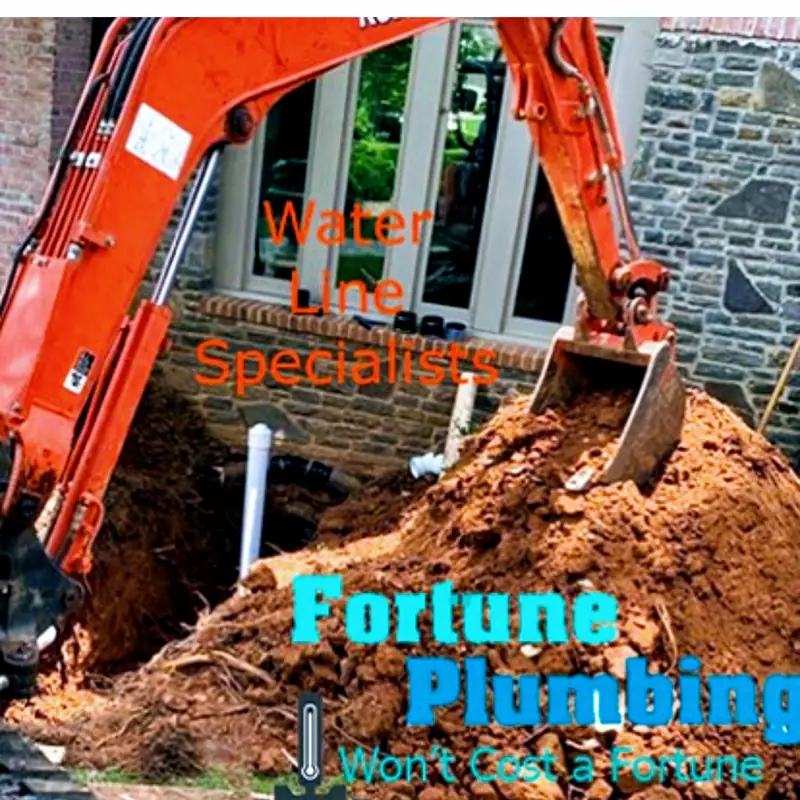
A water service line runs the opposite direction from a sewer lateral. Instead of carrying wastewater out to the street, it carries fresh water in, from the utility connection at the road, through the meter, and into the house. It's the one pipe every fixture in the home depends on, and when it starts to fail, everything downstream of it feels the effect at once.
Two reasons a water service line actually fails
There are really only two ways this happens. The first is natural wear, the pipe simply reaching the end of its expected lifespan, which is the case with most galvanized water lines still in the ground around North Georgia. The second is that the original pipe installed was never good material to begin with, and thin wall blue poly is the classic example of that.
Galvanized pipe and internal buildup
Galvanized steel pipe is coated in zinc to resist corrosion, but that coating wears away from the inside over decades of water running through it. Once the zinc is gone, the bare steel underneath rusts and scales, and the buildup narrows the pipe's inside diameter year after year. Water still comes through, but slower and at lower pressure, until the pipe eventually corrodes through completely or narrows to almost nothing. A homeowner rarely notices the narrowing happen gradually, only the day the shower can't keep up with the dishwasher running at the same time.
Thin wall blue poly, and why it was never good pipe
Blue polyethylene pipe has been a standard water service material for decades, but not every version of it holds up the same way. Thin wall poly, installed cheaply in a lot of homes and additions built during certain years, has a wall too thin to handle ground shift, soil pressure, and freeze cycles the way a properly rated pipe does. It tends to split or crack years before a thicker line would, and when it goes, it usually goes without much warning.
What the signs look like above ground
- Water pressure that has dropped house wide, not just at one fixture
- A water bill that climbed without any real change in how much water gets used
- A wet or unusually green patch of yard along the run between the meter and the house
- Brown or discolored water right after the line has been disturbed or turned back on
What the dig actually looks like
The line gets located first, with camera equipment or a locator, so the exact run is known before anything gets opened. From there the excavator digs only that path, not the whole yard between the street and the house. Locating the line first is what keeps the excavation small, a narrow trench along the actual pipe route instead of a wide guess across the yard.
How long a service line actually lasts
Galvanized steel water lines typically run somewhere between 40 and 70 years before internal buildup gets bad enough to matter, though the specific water chemistry in an area speeds that up or slows it down. Thin wall poly doesn't get anywhere close to that range, and homes with it installed sometimes see a first failure inside 20 years. Knowing which material is in the ground, something a camera pass or a look at the meter connection can usually settle, is most of the battle in predicting whether a line has years left or months.
A partial failure is often the first warning rather than the last. A pinhole leak in galvanized pipe, patched once, is a sign the rest of the line is at the same age and the same condition, not an isolated event. Treating one leak as the whole story, rather than a symptom of a pipe near the end of its life, is how a homeowner ends up calling back a few months later for the same problem a little further down the same line.
A failing water service line rarely announces itself all at once. It shows up as pressure that's been a little low for months, or a water bill that crept up without an obvious reason. Fortune Plumbing has replaced galvanized and thin wall poly service lines across Gainesville, Cumming, Dawsonville and the rest of North Georgia, and can be reached at (770) 532-9489 or by text at (770) 295-9117.
Fortune Plumbing, (770) 532-9489
Call (770) 532-9489More articles
Why a Camera Goes Down the Line Before the Snake Does
A blocked drain has more than one possible cause, and guessing wrong turns a twenty minute fix into a dug up yard.
What a Failing Sewer Lateral Sounds Like Before It Backs Up
The sewer lateral usually sends a signal weeks before it actually fails, and most of the signals get ignored.