Find it before we open it
Three different hunts, three different leaks
Kitchen leaks, bathroom leaks and outdoor leaks do not behave the same way and do not get found the same way. We locate first, so the repair stays the size of the leak.
Chapter 01
Kitchen, bathroom and outdoor leaks are three different hunts
A kitchen leak is usually a supply line under the sink, a dishwasher connection, or a slow drip at the disposal that has been running long enough to soften the cabinet floor underneath it. A bathroom leak is more often the shower pan, the wax ring under a toilet, or a supply line hidden inside a wall behind tile, which is exactly why bathroom leaks tend to go unnoticed the longest.
An outdoor leak is a different search again. No walls to open, but a much bigger area to cover, and the sign is usually a soft or unusually green patch of yard rather than water anyone can see moving. It can be the irrigation line, it can be the service line itself, and telling those two apart before anyone digs saves a lot of unnecessary trenching. Three leaks, three starting points, and we treat them that way instead of running the same checklist on all of them.
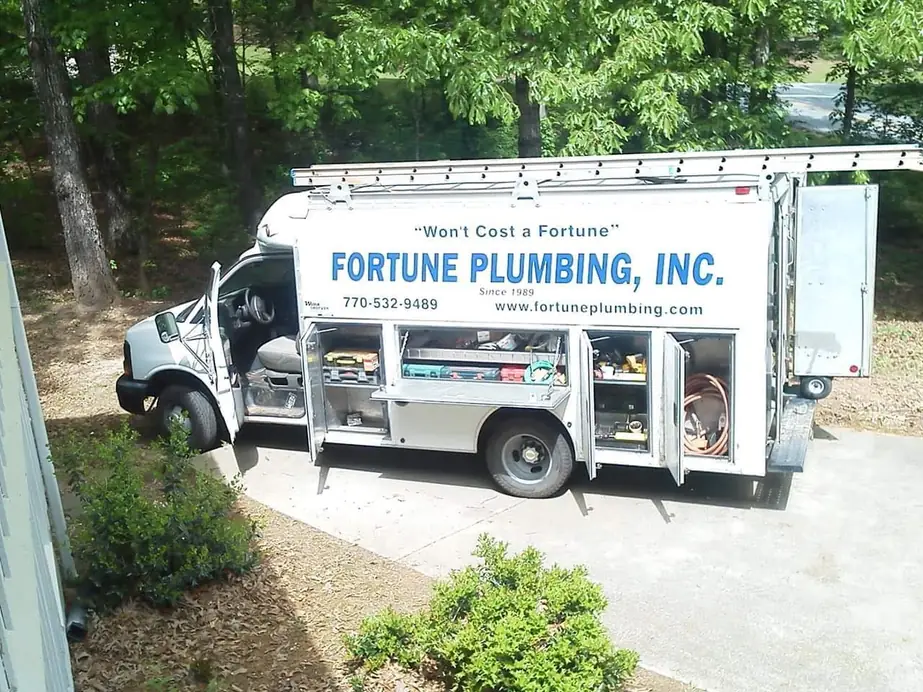
A Fortune Plumbing service truck lettered Won't Cost a Fortune, parked at a job in North Georgia
Before we get there
If water is actively running where it should not be, the single most useful thing anyone can do before we arrive is find your home's primary shut-off valve and shut off the water at the valve. That one step turns a flood into a repair, and it costs nothing to do while waiting on us. Most homes have it near the meter or where the line first enters the building, and it is worth knowing where that valve is before there is ever a reason to reach for it in a hurry.
Once the water is off, the damage stops getting worse, and we can work the actual problem instead of racing a leak that is still spreading while we look for it. Knowing where that valve is before there is ever an emergency is the difference between a repair to the pipe and a repair to the pipe plus the flooring, the drywall and the cabinetry underneath it.
Chapter 03
Locating the leak without opening the whole wall
Most leaks do not need a wall opened to find them. Pressure and sound testing narrow the search to a section of pipe long before anyone reaches for a hammer, and for a slab or a hidden supply line, that narrowing is the difference between a small patch job and a room that has to be rebuilt. Kitchen and bathroom leaks in particular tend to hide behind cabinetry or tile, and the temptation to just start opening things up is exactly what a proper locate is meant to prevent.
We locate first for the same reason we run a camera down a sewer line before digging: opening the wrong spot is expensive and unnecessary, and a leak that has already been narrowed to a two-foot section is a much smaller repair than one nobody has located yet. It also means less disruption inside the house while the work is happening, which matters a lot more for a bathroom leak than it does for a trench in the yard.
Repair, then verify under pressure
Once the leak is found, the repair itself is usually the fast part. What is not optional is verifying it. Every repair gets checked under pressure before we call the job finished, because a leak that looks fixed and a leak that is actually fixed are not the same thing, and the only way to know which one you have is to test it. A fitting that holds at rest can still weep under the pressure the house actually runs at, and that gap is exactly what a pressure test is built to catch.
That step is what keeps a repair from becoming a second visit a month later for the same leak in the same spot. Whether it was a kitchen supply line, a bathroom wall or a run under the yard, the job is not finished until the fix has been tested at real pressure, not just looked at.
Fortune Plumbing, Family-owned and operated since 1989. Call (770) 532-9489.
Don't Let a Leak Damage Your Property
Three different hunts, and the one thing worth doing before we arrive.
- Kitchen leaks
- Bathroom leaks
- Outdoor leaks
- Find your home's primary shut-off valve and shut off the water at the valve.